
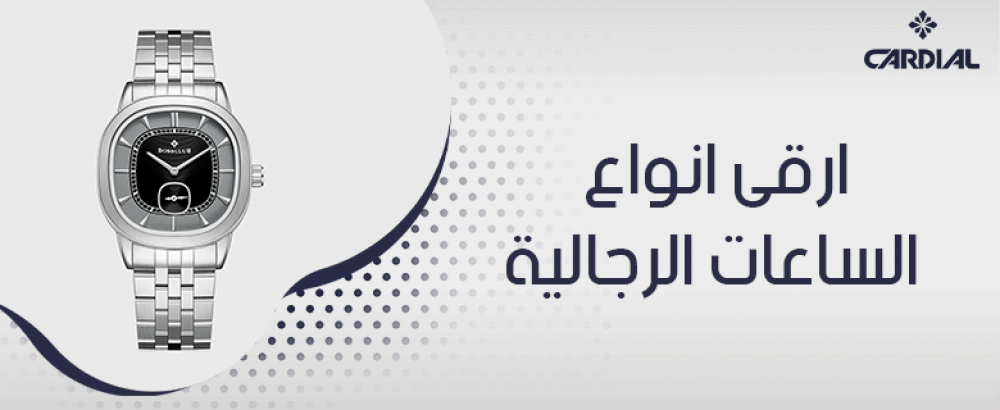
The search for the finest men's watches typically begins with a curiosity to explore different elegant styles, before delving into what truly makes one watch more sophisticated than another. A watch's value isn't solely determined by its price or brand name, but also by the harmony of its design, the quality of its materials, the type of movement it uses, and its suitability for the size and the occasion. Therefore, a definitive list of the best watches cannot be compiled without clear comparative criteria.
This content explores the different types of men's watches and the criteria for distinguishing between attractive appearance and genuine quality. It caters to men in Saudi Arabia looking for a watch for everyday use, work, or special occasions, as well as those seeking an elegant gift for a loved one. A diverse range of designs is available in the market to suit different tastes and budgets, ensuring that every fashion enthusiast can find something to match their personal style.
What are the finest types of men's watches?
The finest men's watches are distributed across several main styles that differ in design and functions. Describing a watch as fine depends on the harmony between the shape, finish, specifications, and its suitability for the intended use, and not on a fixed or approved order.
formal and classic watches
Formal and classic watches are characterized by a calm and elegant design suitable for both work environments and special occasions. In contrast, sporty styles tend to be more appropriate for casual and everyday wear. Choosing a particular style does not automatically guarantee its superiority in terms of quality; each style serves a different purpose.
Sports watches and diving watches
Sports watches and diving watches belong to a category designed for practical use and outdoor activities. This category has a robust character suitable for active pursuits, but it remains a complementary option to dress watches rather than a more refined alternative.
Chronograph watches for additional functions
A chronograph is a functional category within men's watch classifications, offering additional features beyond simply displaying the time. This style can be compared based on the design and functions of each individual watch, without assuming the existence of features not explicitly stated.
Slim watches with large dials
Slim watches and watches with large dials are among the most common design styles. The size of the dial or the thinness of the case describe only the external appearance of the watch and are not the sole indicator of the quality of the internal movement or the durability of the materials used.
Metal and quartz watches
This category includes watches made of stainless steel, as well as those with leather or rubber straps. Watches are also classified by movement type: quartz or mechanical. It's best to avoid generalizing specific features to all watches, as materials and movements vary from one luxury men's watch to another, whether it's a formal or sports watch.
Indicators of sophistication and quality in men's watches
A luxurious impression differs from verifiable actual quality; a shiny dial, gold color, or high price alone do not guarantee the quality of the movement or the durability of the case. Distinguishing between these two aspects requires considering specific elements related to design, specifications, and the strap material.
The external appearance of the watch is linked to a set of formal elements that give an elegant impression, but are not sufficient on their own to judge the actual performance.
- The harmony of the structure and dial: the harmony of colors and shapes between the watch body and its face reflects the precision of the design.
- Clarity of indicators: The easy-to-read numbers and hands indicate attention to visible details.
- The quality of the visible finish: the smooth edges and precise assembly add a touch of visual sophistication.
- Matching the strap to the watch: The color and material of the strap match the design of the case, enhancing the overall look.
Verifiable specifications
True quality includes a set of technical data that can be referenced, rather than relying solely on the overall appearance.
- Movement type: Determines the mechanism of the internal clock.
- The materials mentioned for the frame and bracelet: illustrate the nature of the materials used in manufacturing.
- Case size and band width: These affect the watch's fit to the wrist size and overall appearance.
- If the water resistance rating is specified: it is preferable to rely on the specific rating mentioned without converting a general description such as "water resistant" to a use or rating that is not mentioned.
- Available warranty data: represents a portion of the verifiable specifications where available.
Bracelet material and suitability for use
The performance of the bracelet varies depending on the material it is made of, which is reflected in how suitable it is for everyday, formal, or sporty use.
Metal bracelet:
- Appearance: Suitable for both formal and everyday looks.
- Usage: It may be heavier and less flexible compared to a rubber band.
Rubber band:
- Appearance: Often associated with a sporty and practical character.
- Usage: It is characterized by its lightness and flexibility in daily movement.
Leather bracelet:
- Appearance: It appears within the classic design options.
- Usage: Suitable for those looking for a stylish, traditional look.
Scratch or rust resistance and resale value cannot be inferred from the material name or color alone, nor can any watch be described as definitively the best without specific comparisons and declared criteria.
How does quartz movement differ from automatic movement?
Understanding the difference between quartz and automatic movements is an essential step before choosing the finest men's watches, as each movement differs in its mechanism of operation and in the nature of the experience it offers to its wearer.
Quartz movement mechanism
A men's quartz watch typically relies on an electronic circuit that utilizes the vibrations of a quartz crystal to accurately tell time. This mechanism is often powered by a battery that moves the hands, making it a simple yet efficient electronic movement.
The nature of automatic movement
An automatic watch belongs to the category of mechanical movements that draw their power from wrist movement without requiring a battery. The comparison between this type of watch movement and quartz revolves around the user's priorities: is the traditional, time-honored mechanical feel preferred, or ease of use and minimal daily maintenance? Neither movement is inherently superior; the choice depends on personal taste and intended use.
Prioritize movement selection
Quartz movements are generally associated with good accuracy and require less daily maintenance than mechanical movements, needing to replace the battery only when it runs out. Battery life and actual accuracy vary depending on the model, and fixed figures cannot be determined without consulting each watch's specifications.
When choosing between the two movements, it is advisable to consider the following points:
- Accuracy and ease of use: A men's quartz watch is suitable for those looking to set accurate time without the need for frequent daily maintenance.
- Mechanical character: An automatic watch is suitable for those who appreciate traditional mechanical engineering and its movement based on the natural movement of the wrist.
- The movement is not linked to quality: A watch's reliance on a quartz movement does not mean it is less valuable, and a mechanical movement alone does not prove the luxury of the watch or the quality of its other components.
Case size, strap size, and watch symmetry
The fit of a watch on the wrist determines comfort and overall style, and this includes not only the case diameter but also the thickness, lug length, and band width combined. Understanding these elements helps in choosing one of the finest men's watches that suits the shape of the wrist and the nature of its use.
Diameter and thickness of the structure
The case diameter refers to the width of the watch from side to side, usually excluding the crown or side pushers. However, this measurement alone does not determine how well the watch fits the wrist, as the thickness and length of the watch from lug to lug also affect the final look and comfort. It's worth noting that two watches with the same case diameter may look quite different when worn due to variations in case thickness and overall design.
Length of loops and shape of wrist
The length of the lugs plays a key role in how a watch sits on the wrist, determining its suitability for different wrist shapes, whether slender or wide. The way the watch is worn is also affected by this length; a watch with long lugs might appear bulky or disproportionate on a slender wrist, while it would suit a wider wrist better.
Bracelet display and fit
The band width refers to the optimal distance between the lugs and is a crucial factor when considering band replacement. Accurately matching this measurement is essential to ensure the new band fits the watch case securely. A practical way to determine the correct size is to compare the desired watch to another one that already fits comfortably, or to measure the wrist circumference directly. Keep in mind that there is no one-size-fits-all approach.
Selected products from Cardial
Cardial offers a wide selection of men's and women's watches that combine elegance and quality, with options to suit various tastes and are perfect for both everyday wear and formal occasions. A key feature of this collection is its diversity, allowing customers to choose the style that best suits their personality. Below are two examples from this collection available at Cardial .
Lumina watch | Hugo Watch
The Lumina Hugo Watch is a men's timepiece with a classic yet modern design, combining a metal case and bracelet with a round dial. The bezel stands out with its prominent edges and intricately detailed dial, while the metal link bracelet creates a harmonious look suitable for both formal and casual occasions.
The watch features a quartz movement, a 39.5 mm case diameter, and a 26 mm band width. Both the case and band are crafted from stainless steel. It includes a date window at the 3 o'clock position and is available in three colors: white, copper, and sky blue. The sky blue version features a turquoise dial and a silver band.
Men's Rubber Watch Hugo Watch 258097
The Hugo Watch 258097 men's rubber watch is an analog timepiece with a round face and silver-tone bezel, featuring clear markers and hands. The brand's logo appears on the dial alongside Roman numerals at the 12, 3, 6, and 9 o'clock positions, while the textured rubber strap adds a practical look suitable for everyday wear.
The watch features a quartz movement and analog display, with a 38.5mm case and a 20mm rubber strap. It is available in three colors: green with a green dial and strap and a silver bezel; sky blue with a sky blue dial and strap and gold accents on the bezel; and black as an additional option within the collection.
Frequently asked questions about men's watches
Does automatic movement always mean higher quality?
An automatic movement does not automatically guarantee higher quality; judgment depends on the watch's specifications and actual usage needs. The type of movement alone does not determine the quality of the other components used in its construction.
Is the diameter of the frame sufficient to determine the size?
The diameter of the case alone is not enough to determine the right fit. Lug length, thickness, and wrist shape also affect the watch's appearance and comfort when worn.
Is quartz movement a practical option?
Quartz movements are a practical choice for those who prefer ease of use and minimal daily maintenance. This type of movement only requires battery replacement when it runs out.
The finest men’s watches are determined by their harmonious design, clear specifications, and appropriate size for their intended use, whether they are formal, classic, sporty, chronograph, quartz, or automatic. There is no definitive ranking that favors one type over another without setting specific comparative criteria in advance.